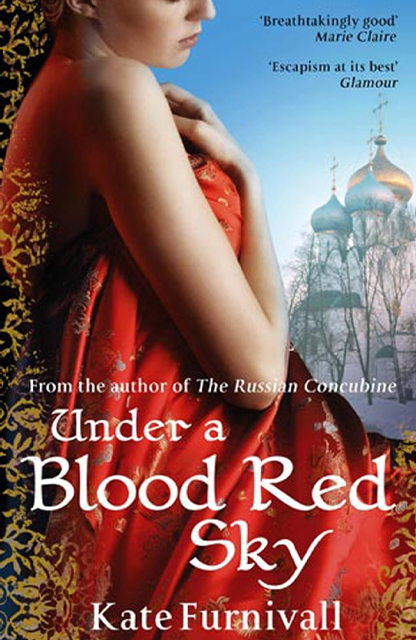
Published by Little, Brown 2008
*** THE Sunday Times TOP TEN BESTSELLING AUTHOR ***
Davinsky Labour Camp, Siberia, 1933
Sofia Morozova knows she has to escape the Russian labour camp. Only two things have sustained her through the bitter cold, aching hunger and hard labour: the prospect of one day walking free, and the stories told by her friend Anna. These are beguiling tales of a charmed upbringing in Petrograd – and about Anna’s love for a passionate revolutionary, Vasily.
So when Anna falls gravely ill, Sofia makes a promise to escape the camp and find Vasily. She sets off to chase the memory that has for so long spun hope in both their hearts. But Sofia knows that times have changed. Russia, gripped by the iron fist of Communism, is no longer the country of her friend’s childhood. Her perilous search takes her from industrial factories to remote villages, where she discovers a web of secrecy and lies that plunge her into danger, but also finds deep bonds of courage and loyalty. But her own loyalty is torn apart when she finds an overwhelming love that threatens her promise to Anna.
REVIEWS of UNDER A BLOOD RED SKY
‘Historical, epic fiction – it doesn’t get much better than this.’ THE BOOKSELLER
‘Escapism at it best.’ GLAMOUR
‘A real page turner. This book will take you on a rollercoaster of emotions, heart in your mouth, while Stalin’s Russia leaps into stark life around you.’ WOMAN’S WEEKLY
‘A compelling read.’ MARIE CLAIRE
‘Editors Choice : This stunning novel brings the harsh atmosphere of 1930s Russia vividly to life. Furnivall draws an excellent portrait of this distant time and place.’ HISTORICAL NOVELS REVIEW
‘Fascinating historical events. Strong characters, two wonderful heroines and a colourful backdrop will intrigue.’ RT BOOKREVIEWS
‘Furnivall’s characters are engaging and her pacing unstoppable in this entertaining story.’ LIBRARY JOURNAL
‘The excitement never falters from start to finish.’ HERALD EXPRESS
‘Atmospheric and gripping.’ SAINSBURY’S MAGAZINE
‘This magnificent work of historical fiction vividly transports us back to Stalin’s Russia.’ TRIBUNE
BUY HERE